
Our Project Management Philosophy
At ATPL, we understand that successful automation projects require a well-defined process, clear communication, and expert oversight at every stage. Our project management approach is designed to guide each project from concept to completion with precision and efficiency. By following a structured, phased methodology, we ensure that every aspect— from initial planning and design to procurement, assembly, testing, and final delivery—is executed with careful coordination and attention to detail. This disciplinedapproach allows us to deliver high-quality automation solutions that meet our customers’ needs while minimizing risks, optimizing resources, and maintaining project timelines.
Project
Breakdown
Our Project Management Philosophy
1. Initialize
The Initialize Phase is where we set the groundwork for subsequent phases. This phase involves critical activities aimed at defining project goals, assembling the project team, and establishing the project’s scope, timeline, communication plan, and resources.
The SDC project management team uses this phase to get familiar with the project, the process, and the customer. In this phase, we establish our project plan and set up the best ways to communicate throughout the project.
Key Deliverables: Project charter, customer requirements document sign-off sheet, kick-off meeting wrap-up, project schedule, and communication plan.
2. Design
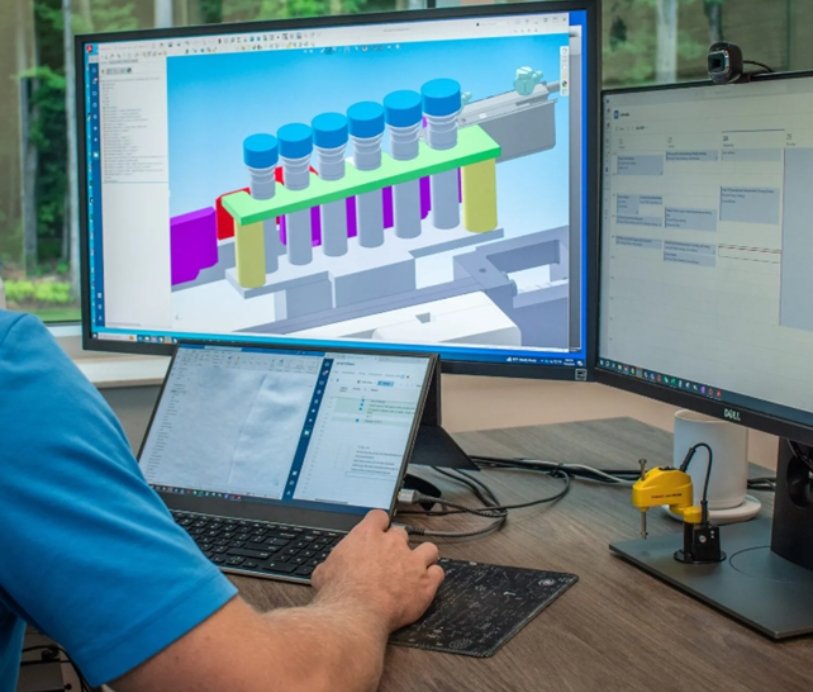
The Design Phase is where the conceptual ideas and requirements gathered during the Initialization Phase are transformed into detailed designs and specifications for the automated system.
This phase involves multidisciplinary collaboration among engineers, designers, domain experts, and stakeholders to create a comprehensive plan for the automation solution. Our process ensures we are organized and efficient while gathering ideas and feedback from both the SDC team and our customers.
Key Deliverables: Project information log, bi-weekly meeting minutes, design reviews, and an up-to-date project schedule and communication plan.
3. Procurement
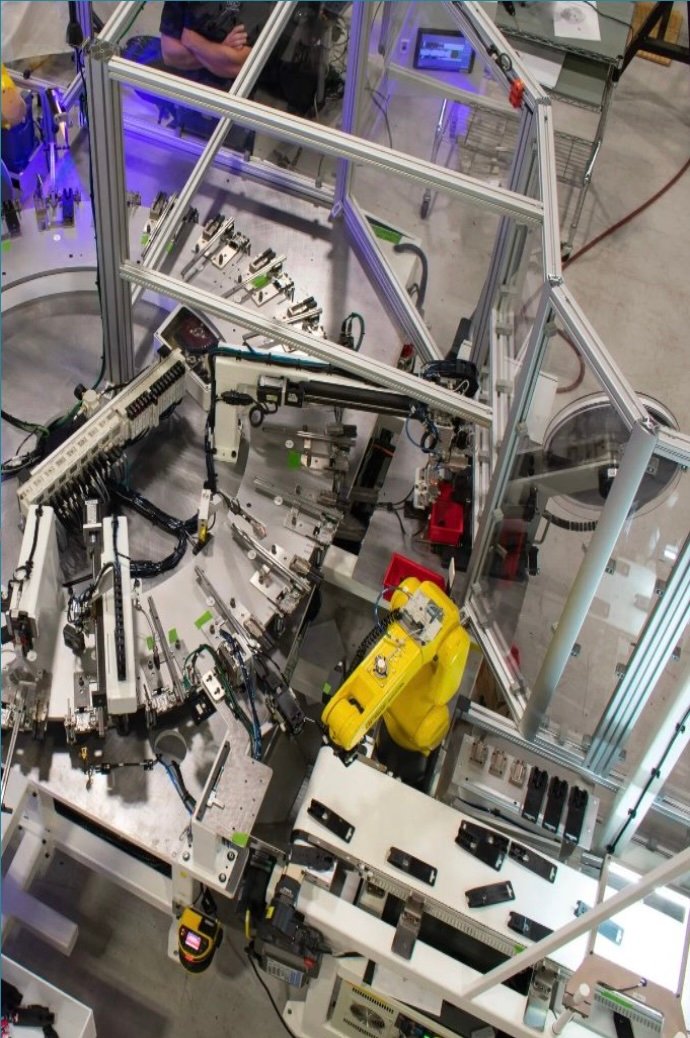
The Procurement Phase involves the acquisition of goods and services necessary for the design, development, implementation, and maintenance of the automated system. This phase encompasses various activities related to sourcing, purchasing, and managing resources, components, and technologies required to execute the project successfully.
Our project managers play a crucial role in this phase by providing structure, oversight, and coordination throughout the procurement process. They develop procurement plans that outline the procurement approach, sourcing strategy, timeline, and budget allocations. They coordinate with stakeholders to determine the timing and sequencing of procurement activities.
Our team also identifies and assesses procurement-related risks, such as supplier delays, quality issues, or cost overruns, and develops mitigation strategies to minimize their impact on project outcomes.
Key Deliverables: Remain the same as the Design Phase.
4. Build
The Build Phase of an automation machine is where the detailed designs and plans created during the Design Phase are translated into physical components and software systems. This phase involves mechanical and electrical construction and assembly.
Project managers work closely with the engineering team during this phase to outline the best build plan, including creating a Work Breakdown Structure (WBS) to identify all tasks and activities required. They also monitor incoming parts and manage risks associated with all stations and assemblies.
Key Deliverables: Weekly progress updates, pictures of components as they arrive and are assembled, and an up-to-date project schedule.
5. Testing
The Testing Phase of an automation machine involves comprehensive evaluation and validation of its functionalities, performance, and reliability to ensure that it meets specified requirements and quality standards.
During this phase, SDC assigns a lead testing engineer who works with the project manager to create and execute a detailed testing plan.
This testing plan includes functional testing to verify that each subsystem and component operates as intended, both individually and as part of the integrated system.
Performance testing is conducted to evaluate the machine’s throughput, accuracy, reliability, and safety under real-world operating conditions.
Compliance testing ensures that the machine meets relevant industry standards, regulations, and safety protocols.
User acceptance testing involves end-users or stakeholders validating the machine’s usability and effectiveness against their requirements and expectations.
As this phase can be the most challenging, SDC builds in additional time by completing earlier phases ahead of schedule whenever possible. This planning is reflected in the up-to-date project schedules shared with customers.
Key Deliverables: Weekly progress updates and an up-to-date project schedule.
6. Closeout
The Closeout Phase involves completing all remaining activities, documenting project outcomes, and transitioning deliverables to the client or end-users. This phase ensures a smooth and organized handover and formal closure of the project.
At SDC, the project manager ensures that all documentation and deliverables are transferred quickly and efficiently to the customer.
Key Deliverables: Final documentation including mechanical models and drawings, electrical and pneumatic drawings, all machine and HMI software, maintenance manuals, and a comprehensive spare parts list.
Our Project Management Software: Why ATPL Uses Smartsheet
- Versatility: Smartsheet offers a wide range of project management functionalities, including task tracking, Gantt charts, resource management, and collaboration tools, allowing easy customization for different project requirements.
- Ease of Use: Smartsheet’s intuitive interface and spreadsheet-like layout make it accessible to users with varying technical expertise, reducing the need for extensive training.
- Collaboration: Smartsheet enables seamless collaboration between SDC teams and customer teams through real-time updates, comments, and file attachments.
- Visibility and Reporting: Robust reporting and dashboard features allow project managers to track progress, monitor key metrics, and provide real-time insights for informed decision-making.