
Introduction
Machine vision systems have revolutionized industrial automation by providing fast, accurate, and reliable visual inspection of products and processes. From quality control to production optimization, these systems help manufacturers reduce errors, improve efficiency, and increase profitability.
Keywords: Industrial Automation, Machine Vision, Vision Inspection System, Quality Control Automation
What Is a Machine Vision System?
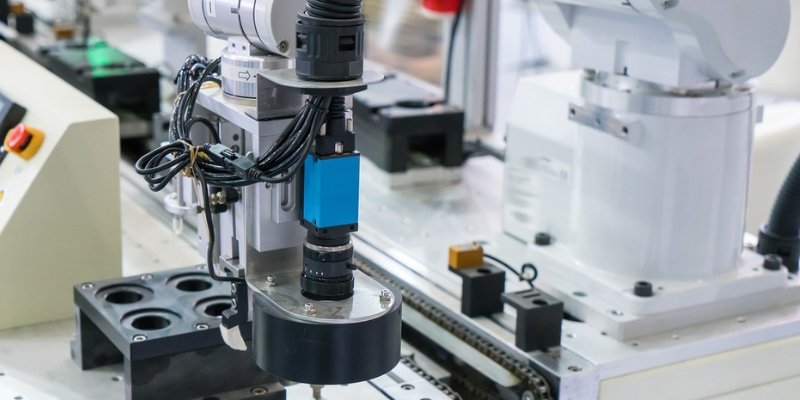
A machine vision system (MVS) uses cameras, sensors, and image processing software to capture and analyze visual information. Unlike human inspection, these systems can detect defects, measure dimensions, guide robots, and monitor processes continuously without fatigue.
Key Components:
- Industrial cameras (2D or 3D)
- Lighting and lenses
- Image processing software
- Communication interface with PLCs or automation systems
Applications of Machine Vision in Industrial Automation
Machine vision systems are widely used across multiple industries:
Quality Inspection
- Detect defective products
- Ensure precise assembly
- Maintain product consistency
Guiding Robots
- Robot pick-and-place operations
- Machine tending and material handling
- Sorting and packaging
Measurement and Verification
- Dimensional measurements
- Barcode and QR code reading
- Label verification
Process Monitoring
- Real-time monitoring of production lines
- Detecting deviations or anomalies
- Reducing waste and downtime
Benefits of Implementing Machine Vision
- Increased Accuracy: Minimizes human error and ensures consistency
- Higher Productivity: Speeds up inspection and reduces bottlenecks
- Cost Savings: Reduces scrap and rework
- Enhanced Safety: Keeps workers away from dangerous tasks
- Data-Driven Decisions: Provides analytics for process improvement
2D vs 3D Vision Systems
- 2D Vision: Captures flat images for surface inspection, code reading, and alignment
- 3D Vision: Captures depth information for object location, bin picking, and complex measurements
Tip: Choose the system depending on your industry, task complexity, and accuracy requirements
Choosing the Right Machine Vision System
When selecting a vision system, consider:
- Industry-specific requirements
- Speed and resolution needed
- Lighting and environmental conditions
- Integration with existing automation equipment
Future of Machine Vision in Industry
With AI and IoT integration, machine vision systems are becoming smarter, capable of predictive maintenance, defect classification, and adaptive control. Industries adopting these technologies are achieving unprecedented efficiency and quality standards.
Conclusion
Machine vision systems are no longer a luxury—they are a critical component of modern industrial automation. By improving accuracy, productivity, and safety, these systems help manufacturers stay competitive in a fast-paced market.
